Training Course on Material Forming Techniques for Prosthetic Fabrication
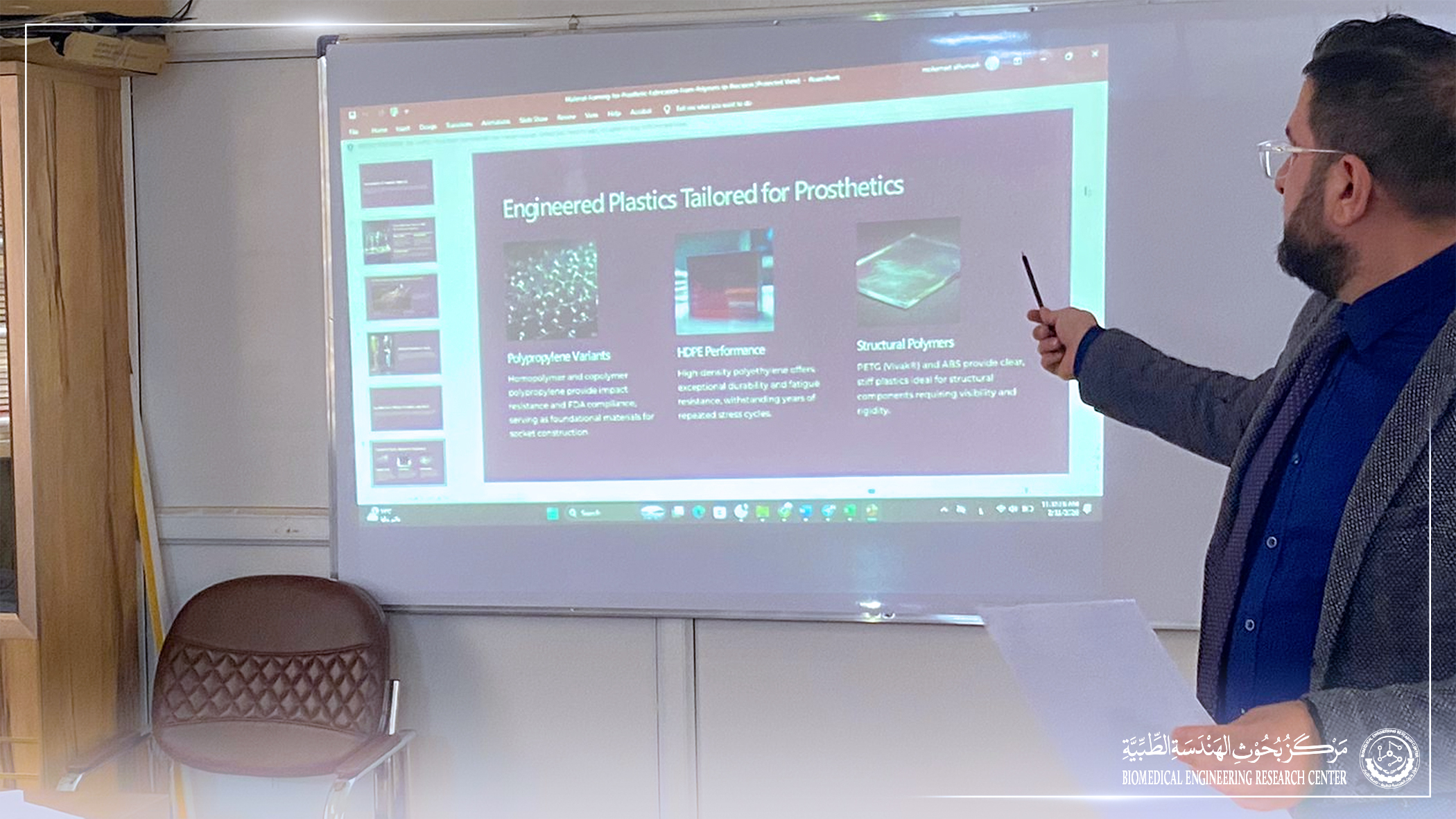
As part of the scientific and research activities carried out by the Medical Engineering Research Center at the University of Anbar, Dr. Mohammed Jassim Al-Jumaili, a member of the research staff at the Center, under the supervision of the Director of the Center, Assistant Prof Dr. Ali Amer Al-Rawi, presented a scientific study addressing the topic of Material Forming for Prosthetic Fabrication as one of the fundamental pillars in the development of assistive medical technologies and the improvement of quality of life for individuals with amputations or physical disabilities. This study focuses on material forming techniques used in prosthetic fabrication, given their critical role in achieving an optimal balance between mechanical properties, functional comfort, and anatomical compatibility for the user. The selection of appropriate materials and forming methods is considered a decisive factor in ensuring durability, lightweight characteristics, fatigue resistance, and biocompatibility with the human body. In addition, the study examines modern material forming approaches, such as thermoforming, compression molding, and advanced manufacturing techniques, which have significantly contributed to enhancing dimensional accuracy and reducing manufacturing defects. Furthermore, the study highlights the importance of utilizing advanced polymeric materials, composite materials, and selected lightweight alloys in prosthetic manufacturing, while clarifying the impact of different forming techniques on the functional performance and long-term efficiency of prosthetic devices. The research also emphasizes the necessity of integrating engineering and medical perspectives in this field by designing prosthetic systems that meet biomechanical requirements and are tailored to the individual needs of patients. This study aligns with a scientific vision aimed at supporting applied research in medical engineering and fostering innovation in the local fabrication of prosthetic devices. Such efforts contribute to the development of effective assistive medical solutions, reduce reliance on imported products, and keep pace with global advancements in this vital discipline.


Topics may interest
Ministerial Committee Visits the Biomedical Engineering Research Center Regarding the Approval of Its EstablishmentCentral Organization for Standardization and Quality Control Celebrates World Intellectual Property Day with Academic and Official Attendance
A Distinguished Scientific Achievement: Biomedical Engineering Research Center at the University of Anbar Indexed in Scopus
The Biomedical Engineering Research Center Receives a Ministerial Committee from Ministry of Higher Education and Scientific Research
Honoring Prof. Dr. Yousif Ismail Al-Mashhadani with the Medal of Creativity and Innovation at the University of Anbar
Professor Dr. Yousif Ismail Al-Mashhadani Selected for “Scientist on the Platform” Initiative Highlighting His Contributions to Biomedical Engineering
Biomedical Engineering Research Center Organizes Training Course on LabVIEW Interface with Arduino Within the activities of the Continuing Education Center
Electrical Engineering Students at the University of Anbar Achieve Third Place with a Smart Water Quality Monitoring System