University of Anbar Hosts Training Workshop on Employment Opportunities and Creativity Potential in Mechanical Engineering
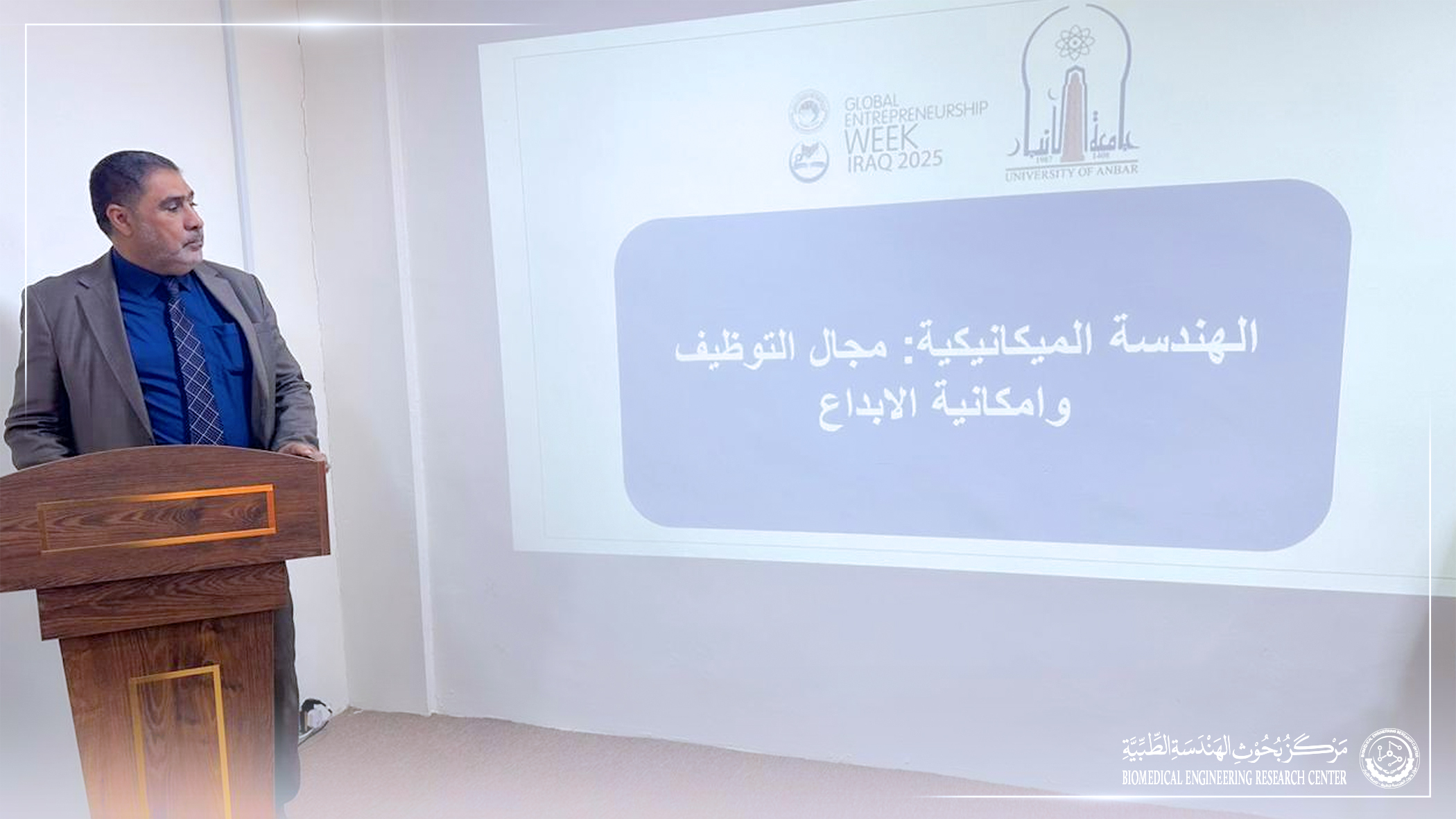
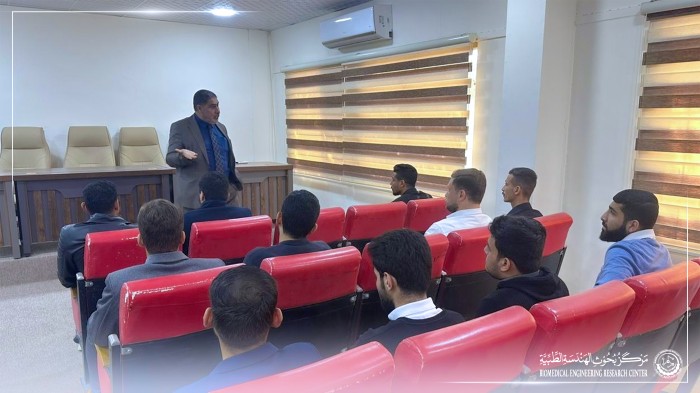
As part of efforts to enhance students’ scientific and professional capacities and to promote a culture of innovation and entrepreneurship, a training workshop entitled “Mechanical Engineering: Employment Opportunities and Creativity Potential” was organized. The workshop was delivered by Dr. Kazem Ahmed Abd, a member of the research staff at the Biomedical Engineering Research Center, University of Anbar, within the activities of the Entrepreneurship Week held at the university. The workshop took place in the Activities Hall of the Mechanical Engineering Building, with the participation of a number of faculty members, students, and interested attendees. The workshop addressed the broad prospects of mechanical engineering as a core and multidisciplinary field, highlighting the employment opportunities available to its graduates across industrial, medical, energy, and advanced manufacturing sectors. It also emphasized the strong linkage between mechanical engineering and modern technologies such as automation, computer-aided design (CAD), smart manufacturing, and advanced materials. In addition, the speaker discussed current labor market requirements and underscored the importance of aligning educational outcomes with market needs through the acquisition of practical skills, analytical competencies, and teamwork abilities in multidisciplinary environments. Furthermore, the workshop emphasized the potential for creativity and innovation within mechanical engineering, particularly in applying engineering knowledge to solve real-world problems and to develop sustainable solutions with tangible economic and societal impact. The role of scientific research and technological entrepreneurship in transforming ideas into applicable products or functional prototypes was also highlighted, alongside opportunities for engineering entrepreneurship and the establishment of innovation-driven start-up projects. The workshop concluded by stressing the importance of such academic and training activities in enhancing students’ professional awareness, motivating them to invest in their creative potential, and supporting the development of effective career pathways that contribute to community service and sustainable development. This aligns with the University of Anbar’s strategic orientation toward fostering entrepreneurial activities and integrating education with research and practical application.
Topics may interest
Professor Dr. Yousif Ismail Al-Mashhadani Selected for “Scientist on the Platform” Initiative Highlighting His Contributions to Biomedical EngineeringBiomedical Engineering Research Center Organizes Training Course on LabVIEW Interface with Arduino Within the activities of the Continuing Education Center
Ministerial Committee Visits the Biomedical Engineering Research Center Regarding the Approval of Its Establishment
Honoring Prof. Dr. Yousif Ismail Al-Mashhadani with the Medal of Creativity and Innovation at the University of Anbar
Electrical Engineering Students at the University of Anbar Achieve Third Place with a Smart Water Quality Monitoring System
A Distinguished Scientific Achievement: Biomedical Engineering Research Center at the University of Anbar Indexed in Scopus
The Biomedical Engineering Research Center Receives a Ministerial Committee from Ministry of Higher Education and Scientific Research
Central Organization for Standardization and Quality Control Celebrates World Intellectual Property Day with Academic and Official Attendance