Electrical Engineering Students at the University of Anbar Achieve Third Place with a Smart Water Quality Monitoring System
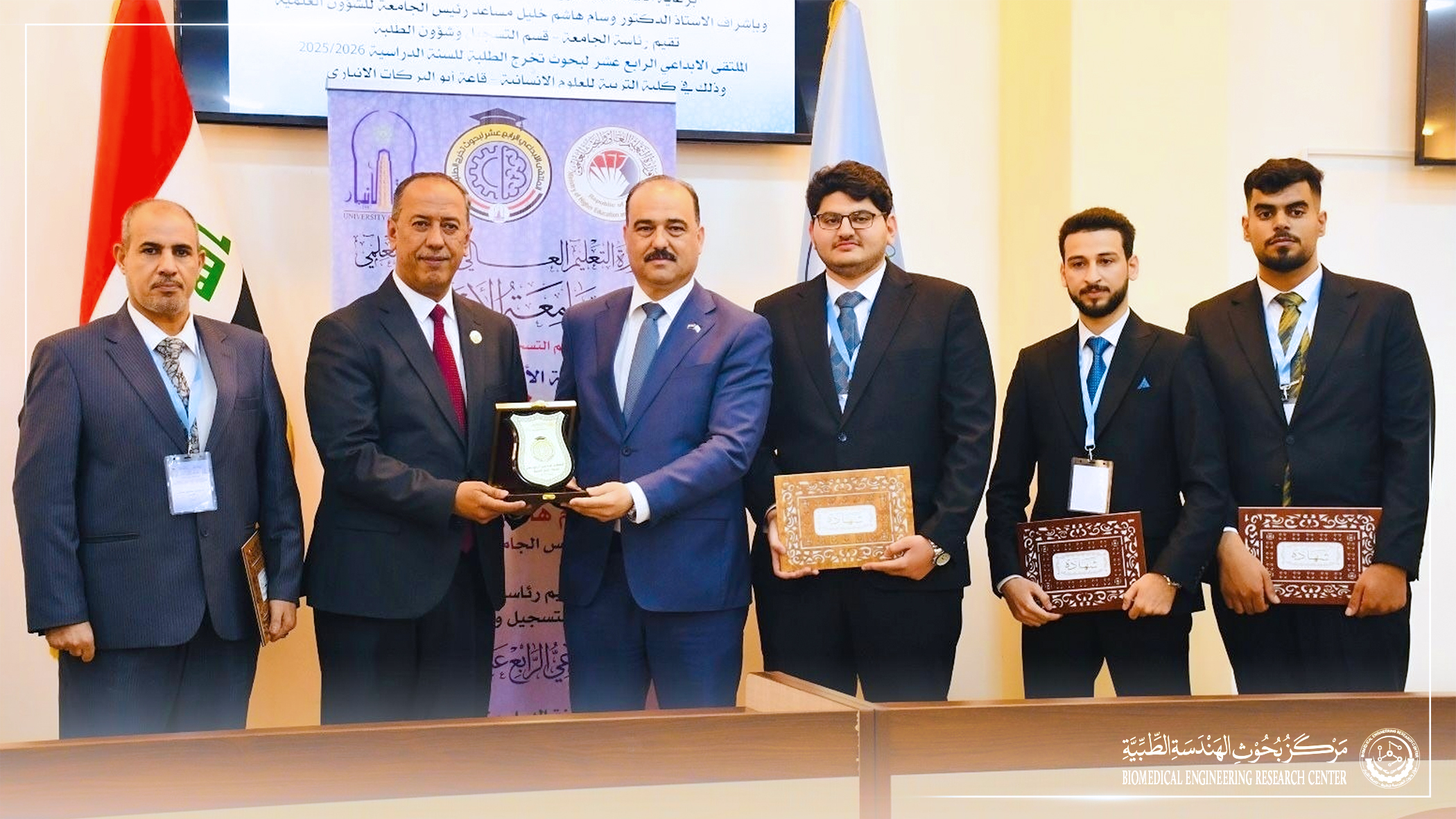
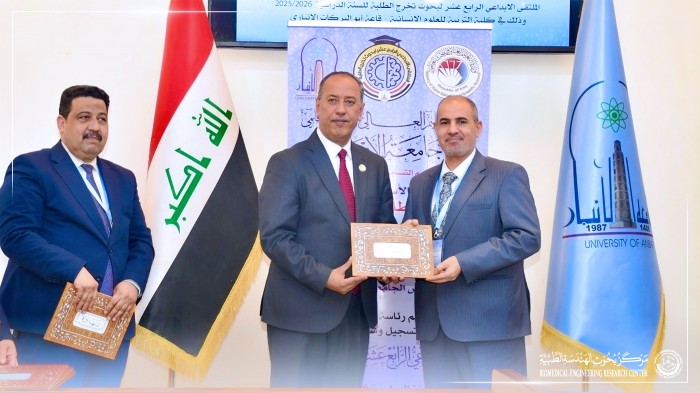
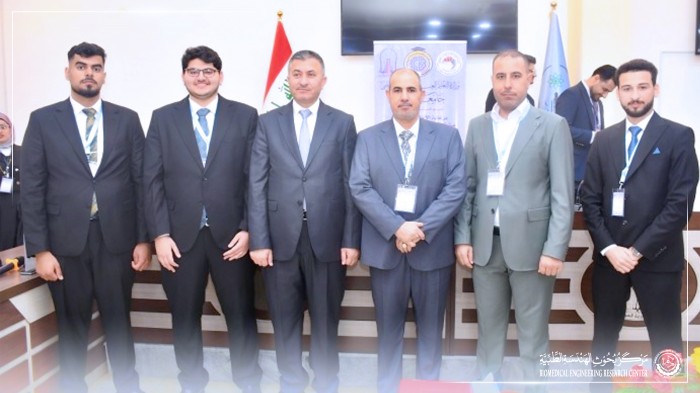
A new scientific achievement is added to the series of successes of the staff of the Biomedical Engineering Research Center at the University of Anbar, where a group of Electrical Engineering students, under the supervision of Prof Dr. Yousif Ismail Al-Mashhadani, a member of the Center, have accomplished a distinguished academic success by securing third place at the university level in the 14th Scientific Student Creative Forum for Graduation Projects for the academic year 2025–2026. This forum is organized annually to foster innovation and enhance students’ research capabilities. This achievement was realized through their project entitled: “Design and Measurement Display Multi-Parameter Water Quality Based on an Optical Fiber System,” which aims to design and develop an intelligent real-time water quality monitoring system. The system measures a set of key parameters that reflect water conditions, thereby contributing to environmental protection, public health, and improving monitoring efficiency in industrial and environmental applications. The project was conducted under the joint academic supervision of Prof Dr. Yousif Ismail Al-Mashhadani and Dr. Mohammed Khalil Awsaj from the Department of Electrical Engineering. Their scientific expertise and rigorous academic guidance played a pivotal role in directing the students and transforming the project concept into a fully functional practical model. The proposed system is based on an Arduino Uno platform as the main processing unit, interfaced with specialized sensors to measure temperature, pH, turbidity, and total dissolved solids (TDS). Additionally, optical fiber technology is utilized for data transmission instead of conventional wiring, providing high immunity against electromagnetic interference (EMI) and ensuring complete galvanic isolation. This significantly enhances system reliability and stability, particularly in sensitive industrial and laboratory environments. Experimental results demonstrated high accuracy and stability of the system, successfully measuring turbidity up to 910 NTU and TDS levels ranging from 31 to 494 ppm, while maintaining stable readings of pH at 7.95 and temperature at 20°C during testing. The project was implemented by the students Miqdad Saad, Yousif Ibrahim, and Ahmed Waddah, who demonstrated a high level of innovation and the ability to effectively employ modern technologies to address a critical environmental issue. This accomplishment reflects the supportive academic environment fostered by the University of Anbar, as well as the vital role of specialized research centers—particularly the Biomedical Engineering Research Center—in guiding student projects toward practical, impactful applications aligned with technological advancement. It is anticipated that this project will contribute to the development of intelligent and sustainable water quality monitoring systems that can be adopted in water treatment plants and environmental and industrial sectors, thereby enhancing its potential for real-world implementation in service of society.
Nombre de vues : 42
Liens connexes
L'Université d'Anbar sélectionnée comme évaluateur officiel pour un journal international d'ElsevierProf. Dr. Yousif Al-Mashhadany sélectionné comme conférencier principal à la Conférence Internationale ICHESD 2026
Réussite Académique Internationale : Un Chercheur de l'Université d'Anbar Nommé aux Conseils Éditoriaux de Revues Scientifiques Mondiales
Dr. Sami Abduljabbar Al-Fahdawi nommé examinateur scientifique pour le journal Computer Networks classé Q1.
Biomedical Engineering Research Center at the University of Anbar Launches a Large-Scale Tree Planting Campaign to Enhance the Campus Environment
Publier un article de recherche scientifique rigoureux dans une revue internationale évaluée par des pairs.
Les étudiants en génie électrique de l'Université d'Anbar obtiennent la première place avec un projet innovant de surveillance de la qualité de l'eau.
Specialized Scientific Workshop on AI Applications in Prosthetics at the University of Anbar